Best Earbuds Business Model in 2026: OEM vs ODM vs Private Label vs Wholesale
Every week someone messages us asking which earbuds business model is “best” — as if there’s one correct answer sitting in a spreadsheet somewhere. There isn’t. There’s a best model for a seller with $8,000 and 60 days before a product launch, and a completely different best model for a distributor who needs 50,000 units on a fixed delivery date. This guide breaks down the four real paths — private label, ODM, OEM/full custom, and wholesale distribution — with actual MOQs, lead times, and cost ranges, so you can match your order profile to the model instead of guessing. If you’re still choosing a manufacturing partner alongside the model, our earbuds manufacturer guide covers that decision separately.
Why “Best” Depends on Where You’re Starting From
We’ve watched hundreds of buyers walk into this decision from the wrong angle. They ask “what’s the best earbuds business model” the way they’d ask “what’s the best phone” — expecting a single winner. But an earbuds business model isn’t a product choice, it’s a capital allocation decision. You’re deciding how much money goes into tooling and R&D versus how much stays liquid for marketing, inventory, and the inevitable surprises that come with importing electronics.
The honest starting point is three questions: How much capital can you commit before your first dollar of revenue? How fast do you need to be selling? And does your brand’s value come from the product itself, or from positioning, marketing, and distribution around a proven product? Answer those three and the best earbuds business model mostly picks itself — and for most sellers, it’s not one fixed answer. It’s a starting point you graduate out of as the product proves itself.
The Four Earbuds Business Models, Compared
Private Label — Fastest and Cheapest, Least Defensible
Private label means taking a factory’s existing, already-validated earbuds platform — chipset, driver, firmware, shell — and applying your logo, packaging, and minor cosmetic choices. No acoustic tuning work, no mechanical engineering, no new mold.
MOQ: Typically 100–300 units for a standard model
Lead time: 30–40 days from sample approval to shipment
Upfront cost: Under $8,000–$15,000 for a first batch, no tooling fees
Trade-off: Anyone else can source the identical unit from the same factory. You’re competing on marketing and price, not product.
This is where most first-time Amazon sellers should start, and it’s a reasonable way to validate that a category or price point actually sells before committing more capital. Our private label earbuds guide walks through the MOQ, cost, and process specifics in more depth.
ODM — The Practical Middle Ground
ODM (Original Design Manufacturer) starts from the same validated platform as private label, but you’re making real choices within it: EQ tuning, touch-gesture mapping, case color and texture, dual-language voice prompts, sometimes battery capacity or driver swap options the factory already supports.
MOQ: Usually 500–1,000+ units, depending on the factory
Lead time: 4–6 weeks from inquiry to shipped product
Upfront cost: Moderate — no full mold cost, but some NRE (non-recurring engineering) fees for firmware or cosmetic changes
Trade-off: You still don’t own the underlying design, and the factory may sell the same base platform to other clients — but your surface-level differentiation is real enough that casual comparison shopping won’t turn up an identical listing.
ODM is where most sustainable earbuds brands actually operate. It’s fast enough to keep up with a fast-moving category and differentiated enough to defend a listing. If you’re weighing this against full OEM, our OEM vs ODM earbuds breakdown goes deeper on the trade-offs.
OEM / Full Custom Development — Maximum Differentiation, Maximum Commitment
Full OEM means you bring the spec — acoustic tuning target, shell geometry, chipset and codec combination, possibly a new mold — and the factory builds to it. This is a genuinely different conversation and a genuinely different budget.
MOQ: 1,000–5,000+ units is common; some factories won’t quote custom tooling below 1,000
Lead time: 60–90 days minimum once you include mold design, tooling, and sample rounds; full ground-up builds can stretch to 3–4 months
Upfront cost: Tooling alone commonly runs $3,000–$15,000+ depending on shell complexity, on top of unit costs
Trade-off: In standard OEM agreements you should own the mold once you’ve paid for it — get that in writing, with mold documentation and photos, because ownership terms vary by factory and by contract.
OEM only pays off once you’ve validated demand and need real product differentiation — a distinct sound signature, a chipset combination competitors don’t have, or IP you can defend.
Wholesale Distribution — Volume Over Branding
Wholesale doesn’t require choosing a manufacturing tier at all; some distributors buy finished, already-branded stock in bulk and resell it, while others use ODM or OEM behind their own house brand at volume. The defining feature isn’t the manufacturing relationship — it’s that the business model runs on multiple SKUs, price tiers, and consistent supply rather than a single hero product.
What matters most: stable production slots, multi-SKU inventory, tight price tiers, and a factory that won’t slip a delivery date
Where margin comes from: unit economics at scale, not brand storytelling
Trade-off: Less forgiving of quality drift or missed dates than a single-SKU brand, because you’re managing supply across many products at once
For a deeper look at sourcing at volume, see our wholesale wireless earbuds guide for importers and distributors.
The Hybrid Path — What Most Successful Sellers Actually Do
In practice, few brands pick one model and stay there. The common pattern we see: start with private label or light ODM customization to test a category cheaply, reinvest the margin from early sales into a stronger ODM or OEM variant once a SKU proves itself, then run both in parallel — ODM for fast-moving test products, OEM for the flagship line the brand is built around. Treat the model as a ladder, not a permanent identity. Our guide to starting an earbuds brand walks through this sequencing decision in more detail.
Matching the Model to Your Buyer Type
The best earbuds business model for you is really a function of who you are as a buyer — an Amazon seller testing a first SKU has a different order profile than a distributor filling out a catalog. Here’s how that maps out:
| Buyer Type | Core Concern | Best Starting Model |
|---|---|---|
| Amazon Seller (first SKU) | Low risk, fast test-and-learn | Private Label or light ODM customization |
| Wholesale Distributor | Multi-SKU stock, delivery reliability | ODM at volume, sometimes direct wholesale stock |
| Brand Owner (established) | Defensible product, IP, long-term margin | OEM / full custom |
| Importer / Trading Company | Price tiers, consistent supply chain | ODM with negotiated volume pricing |
| Hardware Startup | Differentiated product, investor story | OEM, occasionally with a hybrid ODM base to control burn rate |
What Actually Drives Profitability in 2026
Standard TWS earbuds have become heavily commoditized — the same core chipset platforms (Qualcomm QCC, Airoha, BES, Jieli) and the same Bluetooth codec stack (SBC, AAC, aptX, LDAC depending on platform) show up across dozens of competing listings at similar price points. That commoditization is exactly why the business-model decision matters more than it used to: when the hardware underneath is largely interchangeable, your margin comes from how well the model you chose matches your actual differentiation strategy, not from the hardware itself.
Three forces are shaping margins specifically in 2026:
Price-tier compression at the generic end. Private label and low-tier ODM products are competing in an increasingly crowded field, which pushes buyers who want durable margin toward ODM customization or OEM differentiation rather than pure logo-swap private label.
Category-level differentiation is where the real margin sits. Open-ear designs, ANC/ENC combinations tuned for calls rather than music, and AI-assisted features like real-time translation are commanding stronger margins than generic in-ear TWS, because they’re harder to commodity-shop on price alone.
Landed cost math has gotten less forgiving. Tariff shifts and tighter marketplace compliance requirements mean the cost of getting a unit from factory floor to a customer’s door needs to be modeled early, not discovered after the first shipment clears customs.
None of this changes which model is “best” in the abstract — it changes how much margin any given model can realistically deliver in the current market.
Common Mistakes That Erase Margin Regardless of Model
Choosing the cheapest ODM quote without checking what’s excluded. A rock-bottom per-unit quote often hides undocumented engineering fees or zero support for firmware updates after launch.
Skipping mold ownership terms in OEM contracts. If you don’t get mold ownership and storage terms in writing, you may be paying for tooling you don’t actually control.
Underestimating certification lead time. FCC, CE, RoHS, BQB, UN38.3, and UKCA/RCM documentation needs to be confirmed with certificate numbers — not just PDFs — before you commit to a launch date, because gaps here cause customs holds, not just delays.
Locking into a factory before verifying it. A business license check through a national registry, a live factory video tour of the actual SMT and assembly lines, and a sample-first order are worth the extra week regardless of which model you pick. Our guide to finding an earbuds supplier covers the verification steps in detail.
Picking private label for a brand that needs defensibility. If your positioning depends on being different from the next listing, logo-swap private label will undercut that positioning no matter how good your marketing is.
Where a Factory Partner Fits Into the Decision
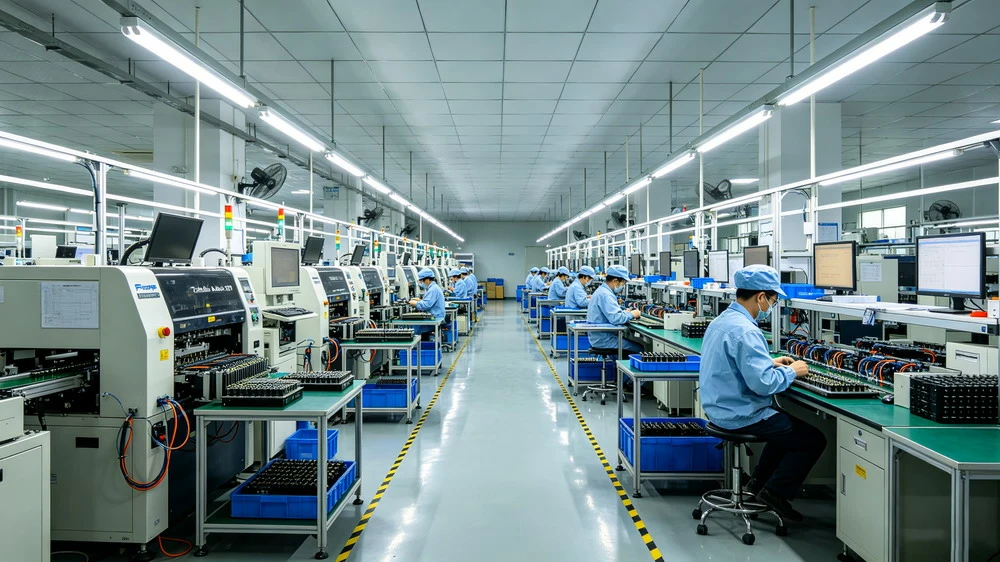
The model you choose only works if the factory behind it can actually execute it. At Tashells Audio, we work across all four models with Amazon sellers, wholesale distributors, and first-time brand owners out of our facility in Fenggang, Dongguan — private label and ODM customization for buyers testing a category, and full OEM development with in-house acoustic tuning and mold ownership support for brands ready to differentiate. Certification support (FCC, CE, RoHS, BQB, UN38.3, UKCA) and IQC/DUPRO/PSI inspection are built into the process at every tier, not added on as an afterthought once something goes wrong.
FAQ
What’s the actual difference between OEM, ODM, and private label earbuds? The short version: how much of the product you actually own. Private label and ODM both start from a factory’s existing platform, with ODM adding real customization on top; OEM is the only tier where you own the resulting design and mold. See the model breakdown above for MOQs and lead times on each.
Which earbuds business model is the most profitable? There’s no fixed answer — margin depends on your differentiation and volume, not the model label. Private label has the lowest upfront cost but the thinnest defensible margin because competitors can source the same unit. OEM has the highest upfront cost but the strongest long-term margin potential once volume and differentiation both scale.
How much capital do I need to start an earbuds brand? Private label first batches commonly run under $8,000–$15,000. ODM customization adds moderate engineering fees on top of unit costs. Full OEM adds tooling costs of roughly $3,000–$15,000+ before you’ve paid for a single unit.
Can I switch from private label to OEM later? Yes — this is the most common path we see. Sellers validate demand with private label or ODM, then reinvest margin into OEM development for the SKUs that prove themselves, rather than committing to full customization before they know a product will sell.
Do I need a trademark or Amazon Brand Registry before launching? If you’re selling on Amazon, registering your trademark and enrolling in Brand Registry before your first shipment lands protects your listing and gives you access to brand-protection tools — it’s worth doing before launch rather than after a competitor copies your listing.
How long does it take to go from decision to shipped product? Private label: roughly 30–40 days from sample approval. ODM: 4–6 weeks from inquiry to shipped product. Full OEM: 60–90 days minimum, sometimes 3–4 months for ground-up builds once mold design and multiple sample rounds are included.
Choosing Your Model
There’s still no single best earbuds business model that fits every seller — but there’s a right one for where you are right now. If you’re testing a new category with limited capital, start private label or light ODM customization — it’s the fastest, least risky way to learn whether a product sells. If you already know your category and need a defensible position, move to ODM customization or full OEM depending on how much differentiation your brand actually needs to compete. And if none of that matches your order profile — you’re managing multiple SKUs at volume — the wholesale distribution model, built on stable supply rather than a single hero product, is the one worth structuring your sourcing around.
Not sure which tier fits your order volume and timeline? Contact our team for a straight assessment — we’ll tell you honestly which model fits before you commit to a quote.