Private Label Earbuds Guide
Most people who message us about private label earbuds start with the same question, worded a dozen different ways: “Can you just put my logo on a pair of earbuds you already make?” The short answer is yes. The longer, more useful answer is what this guide is actually about — what you’re buying when you go private label, what it costs, how long it takes, and where first-time brands lose money by not asking the right questions before they place a deposit.
We’ve run this process from the factory side in Dongguan for years, so this isn’t a marketing overview. It’s the version we’d give a friend who called us before talking to any supplier.
What “Private Label Earbuds” Actually Means
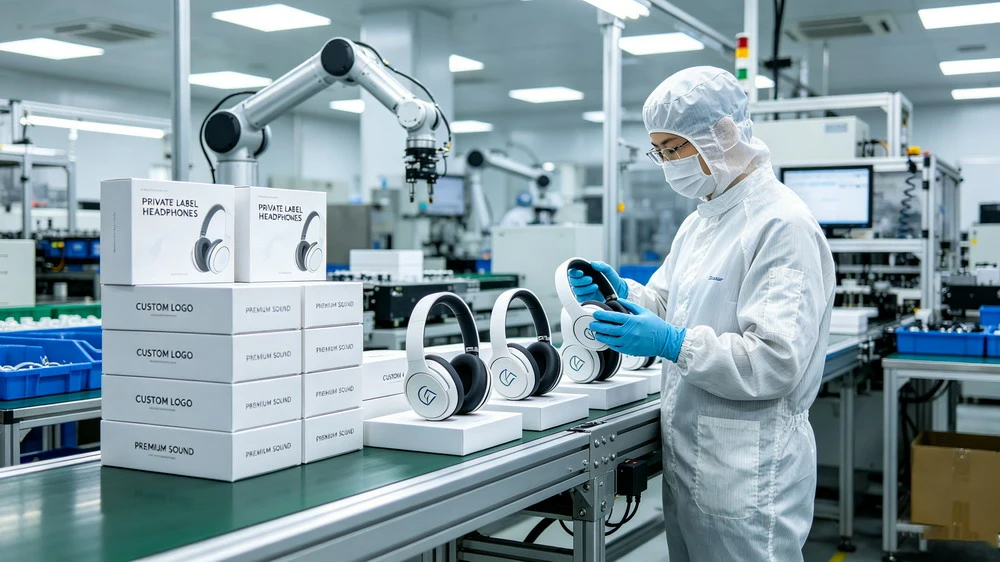
Private label earbuds are earbuds built on an existing, already-validated shell design and internal platform — chipset, driver, battery, firmware — that you brand as your own. You’re not paying for acoustic engineering or a new mold. You’re paying to apply your logo, pick a color from what’s already tooled, choose your packaging, and sometimes swap the boot-up sound or app name.
This is different from a few terms buyers mix up constantly:
White label is nearly identical to private label — the same off-the-shelf product, rebranded. Some factories use the two terms interchangeably; others reserve “white label” for products with even less customization (logo only, stock packaging).
Custom earbuds keep the proven internal platform but change the outside — a modified shell, a molded-in colorway instead of a printed one, custom touch controls. This needs tooling, so it costs more and takes longer.
Full OEM/ODM development means designing acoustic tuning, mechanical structure, or firmware from scratch around your specifications. This is a different conversation with a different budget entirely.
If your goal is a real, sellable, certified product under your brand name within a few months and without six figures of tooling cost, private label is where almost every first-time brand should start.
What You Can Customize (and What You Can’t)
This is where most confusion happens, and where a vague sales call can set the wrong expectations.
You Can Typically Change
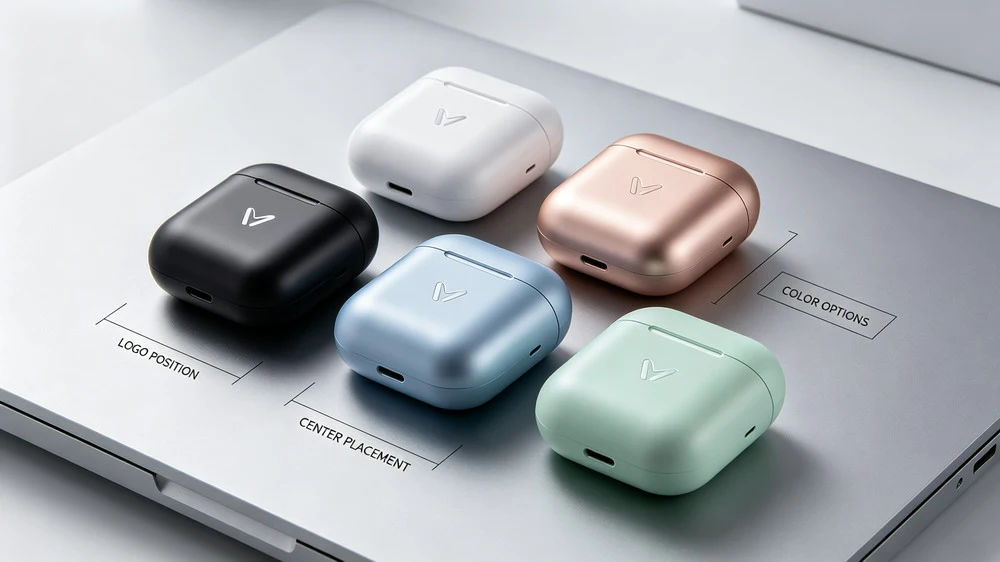
Logo placement (pad printing, UV printing, laser etching, or a small badge insert)
Case and earbud color, from the factory’s existing color library
Packaging design — box artwork, inserts, manual branding
Boot sound, voice prompts, and app name (if the chipset platform supports it)
Button mapping and touch gesture assignments within firmware limits
Accessory bundle (cable type, ear tip sizes, carrying pouch)
You Generally Cannot Change Without Moving Into Custom or Full OEM Territory
The shell’s physical shape or dimensions
The acoustic chamber design or driver diaphragm tuning
The PCB layout or antenna placement
Core Bluetooth chipset platform (Qualcomm QCC, Airoha, BES/Bestechnic, Jieli — each locks in its own codec support and power profile)
If a supplier tells you they can change the shell shape “for free” on a private label order, be skeptical. That’s custom tooling work, and it should show up as a mold cost and a longer lead time — not get absorbed into a standard private label quote.
MOQ and Cost: What It Actually Runs
Numbers vary by chipset platform, feature set (ANC vs. no ANC, IPX rating, battery capacity), and how much packaging customization you want. But here’s the realistic range we see across private label orders:
| Customization Level | Typical MOQ | What’s Included |
|---|---|---|
| Logo only, stock packaging | 300–500 pcs | Pad-printed or laser logo, factory-standard box |
| Logo + custom box design | 500–1,000 pcs | Custom artwork box, printed manual, sometimes custom color from existing library |
| Logo + custom color + branded firmware sounds | 1,000–2,000 pcs | Color-matched shell (from tooled options), custom boot sound/app name |
Unit cost for a mid-tier private label pair — Bluetooth 5.3, IPX4–IPX5, 20–30 hours total playback with the case, no ANC — typically lands in the low-to-mid single digits USD FOB, before packaging and freight. Add ANC or LDAC/aptX codec support and the platform tier goes up, which moves unit cost up with it. Packaging customization (custom box tooling, printed inserts) is usually a one-time setup fee separate from the per-unit price, not baked into the unit cost.
We’ve written a longer breakdown of how MOQ actually gets set — it’s not arbitrary — in our minimum order quantity guide for custom earbuds, which is useful background even for private label orders since the underlying logic (line changeover cost, packaging tooling) is the same.
Certification and Compliance Checklist
A private label product still ships under your brand name, which means the compliance burden is yours, not the factory’s, once it’s on a container. Confirm these before you commit to a production run:
FCC (US) and CE (EU) — required for the markets you’re actually shipping into
RoHS — restricted substances compliance, standard for most import markets
BQB — Bluetooth SIG qualification, tied to the specific chipset and firmware combination you’re using
UN38.3 — required documentation for air and sea freight of the lithium battery inside the case
UKCA — if the UK is a target market, separate from CE post-Brexit
RCM — for Australia and New Zealand, if relevant
Ask for certificates matched to your actual model and production batch — not a generic certificate reused across the factory’s whole catalog. That distinction matters more than it sounds like it should; we cover why in our earbuds quality testing guide.
How the Process Actually Works, Step by Step
Define your spec sheet. Codec (SBC/AAC minimum, aptX/LDAC for higher tiers), battery life target, IP rating, ANC or ENC needs, target retail price. This determines which chipset platform and shell options are even on the table.
Select a base shell and platform. The factory shows you existing, already-certified models that match your spec. This is the private label starting point — no tooling.
Confirm customization scope. Logo, color, packaging, firmware branding — locked in before quoting, since it changes MOQ and price.
Sample approval. Always request a physical sample before bulk production, not just renders. Test connection stability, fit, and battery claims yourself.
Deposit and production. Standard is 30–50% deposit, balance before shipment. Production typically runs 25–40 days depending on order size and packaging complexity.
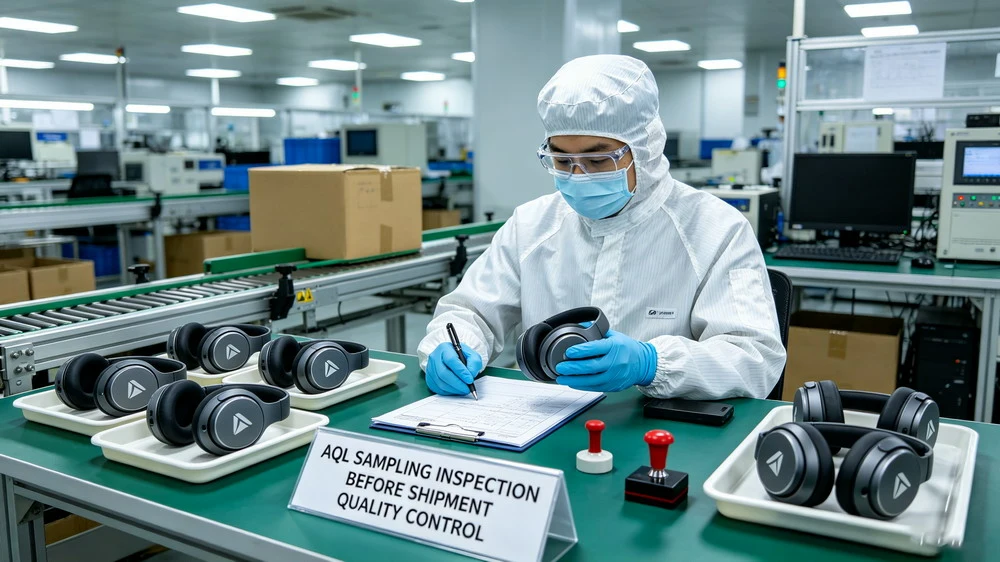
QC and inspection. IQC on incoming components, in-line checks mid-run, and a pre-shipment inspection (PSI) at an agreed AQL level — ideally with photo evidence, not a summary report after the fact.
Shipping and documentation. FOB terms are most common for first-time buyers; confirm UN38.3 battery documentation is included for your freight forwarder.
A realistic timeline from signed spec sheet to goods on a boat is 5–8 weeks for a straightforward logo-and-packaging private label order. Add 1–2 weeks if you’re waiting on a color that needs to be matched from an existing library rather than picked off the shelf.
Common Mistakes First-Time Private Label Brands Make
Skipping the physical sample. A render or a factory photo is not a sample. Order one, test it yourself, and only then approve bulk production.
Choosing the lowest quote without checking what’s excluded. A price that looks 20% cheaper often means a lower AQL sampling level, no PSI, or reused certificates.
Not asking which chipset platform is inside the box. This determines codec support, power draw, and firmware customization limits — and it’s rarely volunteered unless you ask directly.
Underestimating packaging lead time. Custom box printing can take as long as the earbuds themselves, and it’s the step most likely to blow a launch date.
Assuming private label means no compliance work. The certificates need to match your actual SKU, not just exist somewhere in the factory’s files.
Private Label vs. White Label vs. Custom vs. Full OEM
| Private Label | White Label | Custom Earbuds | Full OEM/ODM | |
|---|---|---|---|---|
| Tooling required | No | No | Yes (shell mold) | Yes (full development) |
| Typical MOQ | 300–2,000 pcs | 100–500 pcs | 2,000–5,000 pcs | 5,000+ pcs |
| Lead time | 5–8 weeks | 4–6 weeks | 10–14 weeks | 16+ weeks |
| Differentiation | Branding, color, packaging | Branding only | Shell shape, unique colorway | Full acoustic/firmware control |
| Best for | Amazon sellers, first-time brands | Fast, low-commitment tests | Established brands scaling up | Brands with a real product roadmap |
If you’re still deciding between these four paths, we walk through the decision in more depth in our guide to starting an earbuds brand.
Choosing a Private Label Earbuds Partner
The gap between a good private label experience and a bad one usually isn’t the earbuds themselves — most factories in Shenzhen and Dongguan pull from a similar pool of chipset platforms and shells. The gap is in whether the factory tells you the truth about MOQ, actually runs incoming and in-process QC instead of just final inspection, and matches certification documents to your real batch.
At Tashells Audio, private label is a standing part of how we work with Amazon sellers, wholesale distributors, and first-time brand owners — from spec selection through IQC/DUPRO/PSI inspection and export documentation (FCC, CE, RoHS, BQB, UN38.3, UKCA). If you want a second opinion on a quote you’ve already received, or you’re starting from a blank spec sheet, that’s a conversation we have daily. For the supplier-vetting side of this — how to tell a real factory from a trading company reselling someone else’s stock — see our guide to finding a private label earbuds manufacturer.
FAQ
What is the difference between private label and white label earbuds?
They’re close enough that many factories use the terms interchangeably. Where a distinction is made, white label usually means logo-only branding on a fully stock product, while private label allows a bit more room — color choice, packaging design, sometimes branded boot sounds — without touching the mold.
What is the minimum order quantity for private label earbuds?
Most factories set MOQ between 300 and 2,000 units depending on how much you customize. Logo-only orders on stock packaging sit at the low end; custom packaging and color-matched shells push it higher, since packaging tooling and color runs both have their own setup costs.
How much does it cost to private label earbuds?
Unit cost for a mid-spec pair (Bluetooth 5.3, IPX4–IPX5, no ANC) is typically a few dollars FOB before packaging and freight. ANC, higher-end codecs like LDAC or aptX, and larger battery capacity all move that number up. Packaging customization is usually a separate one-time setup cost.
How long does it take to launch a private label earbuds brand?
Plan for 5–8 weeks from a locked spec sheet to goods leaving the factory, assuming no shell tooling is involved. Custom packaging artwork and color matching are the two steps most likely to add extra time.
Can I customize the sound or firmware on private label earbuds?
Within limits. Boot sounds, voice prompts, app name, and button mapping are usually adjustable on most chipset platforms. Deeper firmware changes — new equalizer profiles, custom gesture logic — depend on whether the platform vendor’s SDK supports it, which varies by chipset (Qualcomm QCC, Airoha, BES, Jieli).
Do private label earbuds come with certifications like FCC, CE, and RoHS?
Yes, on any factory worth ordering from. What matters is what you ask to see: don’t accept a certificate number in a quote — ask for the underlying test report and check that the model number on it matches what you’re actually buying. Some smaller shops recycle one old report across several unrelated SKUs, which is the kind of thing that only surfaces during a customs audit or a returns spike, not during the sales call.