Future Trends of TWS Earbuds
The real shift happening in TWS earbuds right now isn’t a feature — it’s an infrastructure change. The radio stack, the silicon, and the regulatory category earbuds sit in are all moving at once. Brands that lock into today’s platform without accounting for this will be re-tooling molds and re-certifying products within 12 to 18 months. Brands that plan for it now will launch the next generation without starting from zero.
Most “trends” articles skip this and stay at the feature level: AI is coming, ANC is standard now, battery life keeps improving. All true — but that list doesn’t tell a brand owner what to actually do differently when they place their next PO.
This is written from the factory side — what we’re seeing in RFQs, chipset roadmaps, and certification requests — not from a consumer review desk.
Why “More Features” Isn’t the Real Trend Anymore
For the last five years, differentiation in TWS earbuds meant stacking features on top of the same Bluetooth Classic architecture: add a mic, tune the ANC filter, bump the battery cell size. That approach is running out of room. The chipsets that power most mid-range earbuds today were designed around Bluetooth Classic Audio and SBC/AAC codecs, and they’re reaching the practical ceiling of what firmware tuning alone can improve.
What’s changing isn’t the wish list of features. It’s the underlying radio and processing architecture those features run on — and that’s a sourcing decision, not a marketing decision.
The Shift from Bluetooth Classic to LE Audio Native Earbuds
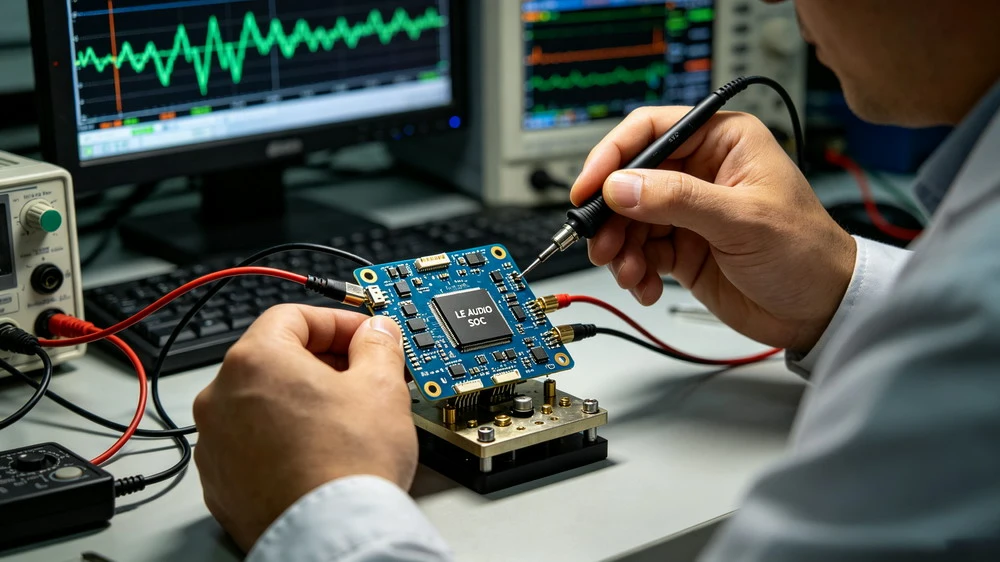
Bluetooth LE Audio isn’t a firmware update to Bluetooth Classic. It’s a different audio architecture, built around the LC3 codec and isochronous channels instead of the older SCO/A2DP model most current earbuds still run on.
What LE Audio Actually Changes for OEM Buyers
LE Audio earbuds typically draw less power at the same audio quality than Classic Audio earbuds, because isochronous channels are more efficient than the older synchronous connection-oriented links. In practice that means smaller battery cells can hit the same rated playtime — which matters for shell design, especially on compact or open-ear form factors where battery volume is already tight.
It also changes what “works with everything” means. A Classic Audio earbud pairs fine with any Bluetooth phone. An LE Audio earbud gets meaningfully better range, stability, and multi-stream audio only when it’s talking to an LE Audio-capable source device. As of 2026, that installed base is still building — flagship phones support it, mid-range Android and older iOS devices mostly don’t yet.
Auracast and the New Use Cases It Unlocks
Auracast is the broadcast-audio feature inside LE Audio: one transmitter, unlimited receivers, no pairing required. Analysts expect broader Auracast adoption to build out through the back half of this decade, with public venues such as cinemas, gyms, transit hubs, and places of worship leading deployment as LE Audio-capable transmitters and receivers become common.
For earbuds brands, that opens categories outside music and calls entirely:
Gym and fitness equipment audio
Airport and transit gate announcements
Museum and venue audio guides
TV silent-listening in shared spaces
None of that is reachable on a Classic Audio-only chipset, no matter how good the ANC tuning is.
Chipset Platforms Racing to Native LE Audio
The sourcing decision actually gets made at the chipset level. Here’s how the main platforms stack up on LE Audio readiness today:
| Chipset Platform | LE Audio Status | Where It Fits |
|---|---|---|
| Airoha AB157x series | Single-chip native LE Audio | Compact TWS, fast time-to-market via MediaTek reference designs |
| Qualcomm QCC series | Migrating, mixed by SKU tier | Mid-to-premium, strong aptX ecosystem, higher BOM cost |
| BES (Bestechnic) newer SoCs | Migrating, LC3-native on newest parts | Mid-range, competitive BOM cost |
| Jieli | Largely Classic Audio | Budget-tier, lowest cost, furthest behind on LE Audio |
None of these platforms are wrong on their own. The mistake is picking one without asking your factory directly: does this chipset have a confirmed LE Audio migration path, or does the next generation require a new PCB and new mold?
On-Device AI Is Moving From Marketing Claim to Silicon Requirement
“AI earbuds” has been a marketing label slapped on cloud-dependent voice assistant integrations for a couple of years. That’s changing because the underlying silicon is changing.
Real-Time Translation Without the Cloud Round-Trip
Early AI translation earbuds routed audio to a phone app, which routed it to a cloud API, which sent text or synthesized speech back. That round-trip adds latency and breaks the moment connectivity drops — a real problem for the travel and business-user segment these SKUs target. Newer chipset platforms are adding dedicated neural processing blocks for on-device noise separation and lightweight inference, cutting the round-trip for at least the noise-isolation and beamforming stages even when full translation still needs the cloud.
What This Means for BOM Cost and Power Budget
On-device AI processing isn’t free. It adds silicon cost and draws power, which competes directly with the battery-life gains LE Audio just bought you. For a brand evaluating an AI translation SKU or an AI-enhanced ENC platform, the real question for your factory isn’t “can it do AI” — it’s what the added NPU or DSP block does to unit cost at your target MOQ, and whether the power budget still hits your battery-life claim on the box.
Earbuds as Regulated Hearables: The Health-Data Convergence
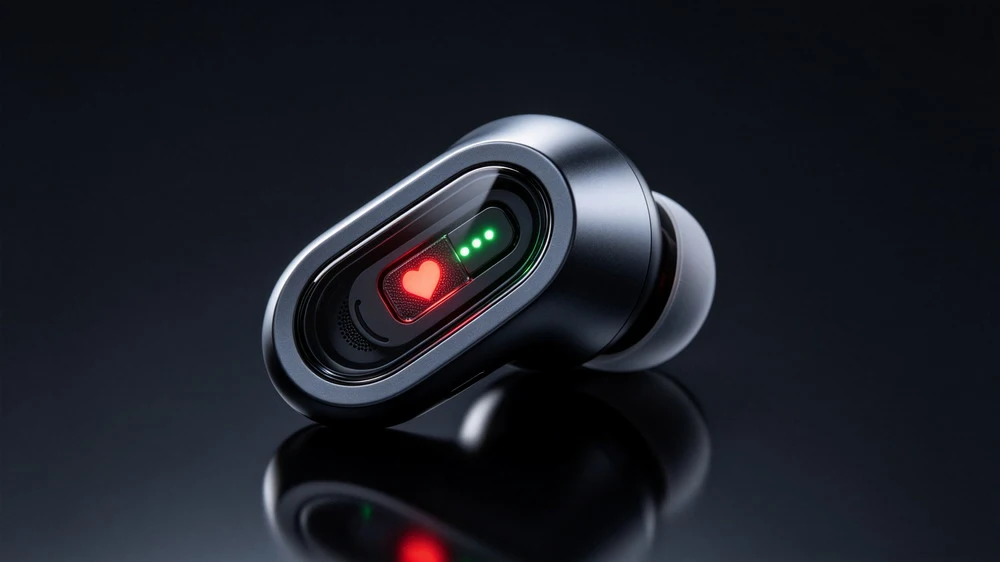
TWS earbuds sit in the ear canal, which happens to be one of the best places on the body to take biometric readings. That’s pulling earbuds toward a category that used to belong to hearing aids and medical wearables — and it comes with regulatory weight most consumer electronics buyers haven’t had to think about before.
OTC Hearing Aid Crossover and Compliance Implications
As LE Audio and Auracast mature, the line between “consumer earbuds with a hearing-boost mode” and “OTC hearing aid” gets thinner. Brands adding features like personalized hearing tests or amplification presets need to know, before tooling starts, whether that feature set pushes the SKU toward hearing-aid-adjacent compliance requirements in target markets — this is a legal and labeling question, not just a firmware one.
Sensor Fusion Without Turning Your SKU Into a Medical Device
Heart rate, temperature, and activity sensors can be added to an earbud shell without triggering medical-device classification — as long as the product is marketed and labeled as wellness/fitness tracking, not diagnosis. That distinction lives in how the feature is claimed on packaging and in app copy, not just in the hardware. Get your factory and your compliance counsel aligned on the claim language before the first production run, not after.
What This Means for Sourcing Decisions Today
Platform Lock-In Risk: Avoid Stranded Inventory
The costliest mistake we see right now isn’t picking the “wrong” chipset — it’s picking a chipset with no stated LE Audio roadmap and finding out eighteen months later that the whole platform needs replacing to stay competitive. Ask for the chipset vendor’s LE Audio and Auracast support timeline in writing before you commit tooling budget. If your ODM factory can’t answer that question, that’s a signal on its own.
MOQ, Certification, and Timeline Implications of Early Adoption
Moving to a newer chipset platform generally means a fresh round of BQB, FCC, CE, and RoHS certification even if the shell design is unchanged, because the radio module itself is different. Build that certification lead time into your launch calendar, and confirm your factory’s MOQ on the new platform — early-generation LE Audio chipsets sometimes carry higher MOQs until yields stabilize.
How Tashells Audio Is Building Roadmap-Ready Platforms
We’re not telling every buyer to jump to LE Audio tomorrow. Plenty of stable, profitable SKUs — budget ANC earbuds, straightforward wholesale TWS — still make sense on mature Bluetooth Classic platforms for the next generation or two.
For clients building for the next 2-3 years rather than just the next PO, we run every new tooling request against a short checklist before quoting:
Does the proposed chipset (Airoha, Qualcomm, or BES, depending on SKU tier) have a confirmed LE Audio timeline from the vendor?
Does the shell design leave room for an NPU/DSP block if AI features get added later?
What does the certification path look like if that migration happens on the current mold?
That checklist is what turns “future trends” into a production plan instead of a marketing slide.
For brands actively evaluating AI translation earbuds or planning their next-generation TWS earbuds platform, our engineering team can walk through which chipset options carry a confirmed LE Audio migration path and what that does to your BOM and certification timeline before you commit to tooling.
FAQ
Is Bluetooth Classic Audio becoming obsolete in TWS earbuds? Not immediately. Classic Audio chipsets remain cost-effective and stable for budget and mid-range SKUs, and most phones in active use today still rely on Classic Audio profiles. The shift toward LE Audio is gradual and will track how fast source devices — phones, laptops, TVs — add native LE Audio support.
Do AI translation earbuds need an internet connection to work? Most current AI translation earbuds still depend on a cloud API for the actual translation step, routed through a companion app. On-device AI processing is currently used mainly for noise isolation and beamforming rather than full translation, though that’s the direction chipset vendors are building toward.
Will my earbuds need FDA or medical-device certification if I add health sensors? Adding sensors like heart rate or temperature monitoring generally does not trigger medical-device classification if the product is marketed strictly as wellness or fitness tracking rather than diagnosis. The claim language on packaging and in app marketing is what determines the regulatory category, so this should be confirmed with compliance counsel before production.
Which chipset platform should I choose for a next-generation earbuds launch? It depends on your target price point, target markets, and how soon you expect to refresh the SKU. The key question to ask any ODM factory is whether the chipset has a confirmed LE Audio and Auracast migration path, so a future upgrade doesn’t require a full mold and PCB redesign.
What is Auracast and why does it matter for earbuds brands? Auracast is a broadcast-audio feature within Bluetooth LE Audio that lets one transmitter send audio to unlimited receivers without pairing. It’s expected to see growing deployment in venues like cinemas, gyms, transit hubs, and places of worship as LE Audio device adoption builds, opening earbuds use cases beyond personal music and calls.
The Bottom Line
That’s the real future of TWS earbuds worth planning for — not a feature you bolt onto an existing platform, but a shift in the radio stack, the silicon, and in some cases the regulatory category the product falls into. The brands that come out ahead won’t be the ones who added the most features first. They’ll be the ones who picked a chipset platform with a real upgrade path before they had to.
If you’re planning your next TWS earbuds generation and want to know whether your current platform has a viable LE Audio migration path, talk to our engineering team before your next tooling decision.