Finding the Right OWS Earbuds Manufacturer: What I’ve Learned Sourcing Open Wireless Stereo Products from China
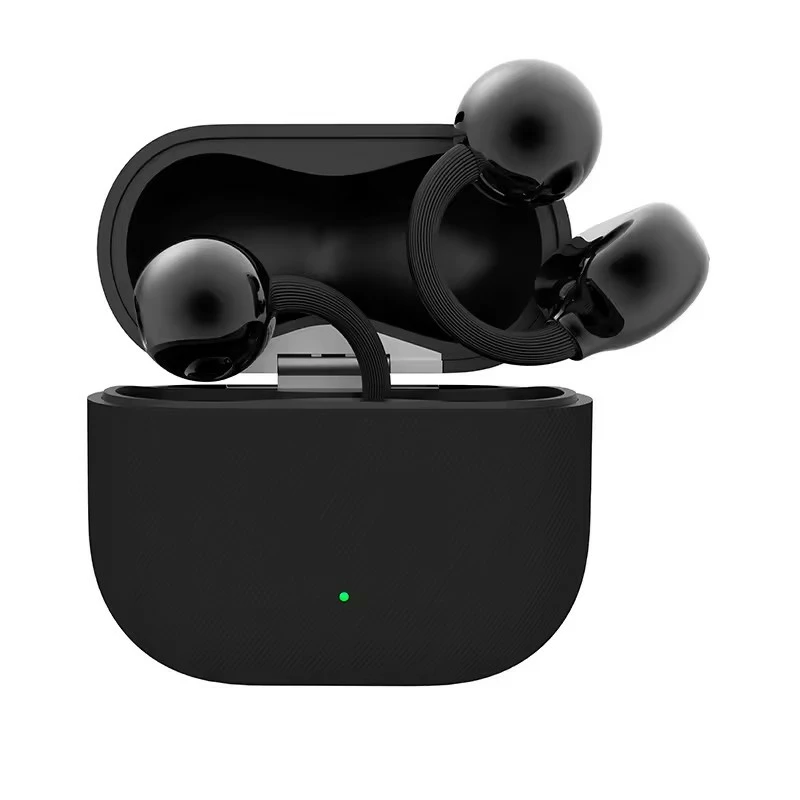
I’ve spent the better part of the last few years bouncing between factory floors in Shenzhen, Dongguan, and Huizhou, and if there’s one category that’s blown up faster than I expected, it’s OWS — Open Wireless Stereo — earbuds. Also called open-ear or air conduction style buds, these are the ones that sit on or around the ear instead of plugging into the canal. If you’re reading this, you’re probably already looking for an OWS Earbuds Manufacturer, so let me save you some of the trial and error I went through.
Why OWS Took Off
A couple of years ago, open-ear was a niche request — mostly sports brands wanting something that wouldn’t fall out during a run. Now I’m getting inquiries from wellness brands, gaming accessory companies, even office headset resellers who want the “always aware” listening experience. The pitch is simple: you keep situational awareness, no ear fatigue after hours of wear, and honestly they just look different on shelf compared to another generic TWS stem design. That differentiation matters a lot when you’re trying to stand out in a saturated Amazon listing.
What Actually Separates a Good Factory from a Mediocre One
When I’m vetting an OWS Earbuds Manufacturer, I don’t start with price. I start with acoustic engineering capability, because open-ear designs live or die on how well the driver handles sound leakage and bass response without an ear seal to help them. A lot of smaller workshops will hand you a generic reference design, slap your logo on it, and call it “custom.” That’s fine if you just want something cheap to test a listing, but if you’re building a brand, you want a factory that actually understands directional sound and can tune the driver angle for your target ear geometry.
Chipset selection matters more here than in sealed earbuds too. I usually see Qualcomm QCC engines for players who want the premium codec story — aptX Adaptive, better multipoint — while Airoha and Bestechnic (BES) platforms show up a lot on the mid-range OWS builds because they’re cost-efficient and the reference designs are mature. Jieli chips still pop up on entry-level SKUs, particularly for clients doing aggressive price-point plays on Amazon or into Southeast Asian marketplaces. None of these are “wrong” — it depends on your price tier and what codec support your target market actually needs (SBC is baseline everywhere, AAC matters for iOS-heavy markets, LDAC if you’re chasing an audiophile crowd, though that’s rare for open-ear).
OEM vs ODM — Actually Think This Through
I get asked constantly whether to go OEM or ODM for an OWS line. My honest answer: if this is your first open-ear SKU, start ODM. Let the factory’s engineering team hand you a validated reference design and you focus your budget on the housing, colorway, and packaging. Once you’ve got sales data and know what’s working, that’s when it makes sense to push into OEM territory with a custom driver tune or a proprietary hook/ear-hanger shape. I’ve seen too many first-time importers burn six months and a chunk of tooling budget on a fully custom OWS mold before they even knew if the category would sell for them.
Certifications — Don’t Skip This Part
Because open-ear buds are still catching up in regulatory familiarity compared to standard TWS, I always push clients to confirm the factory has current FCC and CE documentation specifically for their open-ear SKUs, not just a blanket certificate from an older sealed-bud model. If you’re shipping into the UK, UKCA is non-negotiable now. RoHS and BQB (Bluetooth Qualification) should be standard, and if you’re air freighting with the battery packed, get the UN38.3 report before you even think about booking a forwarder — I’ve had shipments held at customs over missing battery documentation and it’s a miserable, expensive delay to sort out mid-transit.
MOQ and Pricing Reality
For OWS specifically, MOQs tend to run a bit higher than standard TWS because the driver housings and hanger molds are more specialized — I’m usually seeing 500-1,000 units as an entry MOQ for a semi-custom build, and FOB pricing landing anywhere from $6 to $18 depending on driver quality, ANC-adjacent features (some open-ear models now do a light form of environmental noise reduction), and packaging spec. Anyone quoting you $3 FOB on an open-ear bud with a “custom” driver tune is cutting corners somewhere — usually acoustic quality or battery cell grade.
A Factory Worth Mentioning
Out of the manufacturers I’ve worked with directly on open-ear projects, Tashells Audio is one I keep coming back to for OWS specifically. Their acoustic team actually does iterative tuning on the driver angle rather than handing you a stock reference design, which for open-ear makes a real audible difference in bass presence. They’ve also been solid on certification turnaround — had FCC and CE docs ready well within the timeline they quoted, which isn’t always the case even with larger factories.
Bottom Line
If you’re evaluating an OWS Earbuds Manufacturer right now, don’t just RFQ on price. Ask to hear a sample before you commit tooling budget, ask specifically about their open-ear acoustic engineering experience versus sealed-bud experience, and get certification documentation in writing before production starts. The category has real growth left in it, but the margin for a sloppy sourcing decision is smaller than people expect going in.