How to Choose a Reliable Earbuds Supplier
Every earbuds factory on Alibaba calls itself “reliable.” It’s in the company name, the banner image, the first line of every WeChat introduction. So the word has stopped meaning anything by the time you’re actually comparing quotes.
That’s the real problem. “Reliable” isn’t a quality a supplier can claim about itself — it’s a set of facts you can check. A business license that matches the name on your invoice. A certification that shows up in an official database instead of a PDF with no reference number. A factory that will show you the production floor live, on video, instead of sending the same three stock photos everyone else uses.
This guide walks through what those checks actually look like, in the order I’d run them if I were trying to find a reliable earbuds supplier for the first time — not a list of nice-to-haves, but the specific evidence that separates a supplier you can build a business on from one that just sounds good in a chat window. If you’re still building your shortlist rather than vetting one, our guide to finding an earbuds supplier covers that earlier step in more detail.
Why “Reliable” Is the Wrong Word to Start With
Ask ten suppliers if they’re reliable and all ten will say yes. That question filters nothing, because the answer costs the supplier nothing to give.
Try a different question instead: “What can you send me right now that I can check without asking you again?” A factory with real documentation will have an answer within a day — a license number, a certification ID, a scheduling window for a video call. A trading company reselling someone else’s stock will need to “check with the team,” and that delay itself tells you more than the eventual answer does.
The Documentation Layer: What a Reliable Supplier Can Actually Prove
Before any conversation about price or MOQ, a legitimate factory should be able to produce three categories of paperwork without hesitation.
Business License and Company Registration
Ask for the registered company name and cross-check it against the name on any invoice, contract, or bank account they later ask you to pay into. You can look up any Chinese business license directly on the National Enterprise Credit Information Publicity System (gsxt.gov.cn) — search the registered name and confirm the business scope actually includes electronics manufacturing, not just general trading.
This sounds basic, but it’s one of the most common mismatches in earbuds sourcing: a trading company quotes under one name and asks for payment under another. When the names don’t line up, walk away before money moves — don’t treat it as paperwork to sort out later.
Certifications That Should Not Be “In Progress”
A real earbuds manufacturer should name its certification scope without checking with someone else first:
FCC and UN38.3 for the US market (UN38.3 covers the lithium battery in the charging case)
CE and RoHS for the EU
UKCA if you’re also selling into the UK
BQB (Bluetooth SIG qualification) for the Bluetooth radio itself
If a supplier tells you a certification is “in progress” with no document to show for it, that’s a timeline risk you’re inheriting, not them. It’s fine to hear this from a factory that’s genuinely close — it’s a problem when it’s the answer every time you ask.
Third-Party Test Reports
Certifications cover regulatory compliance. They don’t tell you anything about battery life under real use, Bluetooth range in a crowded room, or how the earbuds perform after a few hundred charge cycles. A supplier that’s confident in its own product will usually have lab test reports for these on hand, or won’t mind commissioning one before a large order.
The Verification Layer: Confirming the Paperwork Is Real
Documentation only matters if it’s genuine, and this step takes less time than people expect.
Cross-Checking FCC IDs and Bluetooth SIG Listings
Any FCC ID a supplier quotes can be checked directly against the FCC equipment authorization database, and any BQB declaration ID against the Bluetooth SIG’s public product listing. Both lookups take under a minute and either confirm the certification is real and current, or reveal that it doesn’t exist, expired, or belongs to a different product entirely.
Live Video Factory Audits vs. Stock Photos
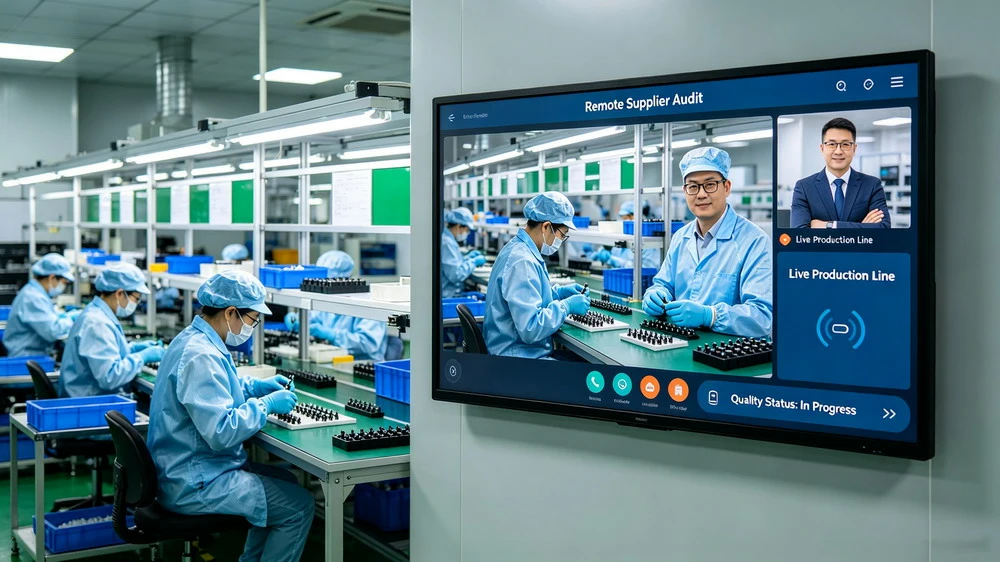
Ask for a live, unscripted walkthrough of the production floor — soldering stations, battery pairing benches, final QA checkpoints — not a pre-recorded video or the same marble-countertop product shots every listing uses. A factory with nothing to hide will usually schedule this without much friction. One that stalls, reschedules repeatedly, or only offers edited footage is telling you something, even if they never say it directly.
The Track Record Layer: What Experience Actually Tells You
Paperwork proves a supplier can produce compliant earbuds. Track record tells you whether they can do it consistently, at your volume, without surprises.
Years in Production and Chipset Platform Experience
A factory with real production history will talk specifically about the chipset platforms it works with — Qualcomm QCC, Airoha, BES (Bestechnic), or Jieli — and which codecs (SBC, AAC, aptX, LDAC, or the newer LC3 for LE Audio and Auracast) each platform supports. Vague answers about “the latest technology” without naming a platform usually mean you’re talking to a trading company reselling someone else’s stock, not the factory that actually built it.
OEM/ODM Capability and MOQ Transparency
A reliable supplier tells you upfront which category you’re getting: a fully custom OEM build with your own mold and specs, or an ODM path built on an existing shell with your branding and minor customization. (Our OEM earbuds supplier guide breaks down that distinction in more depth if you’re still deciding which path fits your brand.) Reliable suppliers quote MOQ and lead time transparently at the outset, without waiting until deposit is due to reveal the real number.
Red Flags That Override Everything Else
Even a supplier that checks every box above can still be a bad fit if any of these show up during negotiation:
Demanding full prepayment before sample approval. A trial run and staged payment terms are standard practice; a supplier refusing both is signaling risk, not offering a pricing preference.
Refusing a live factory tour with no clear reason. Scheduling conflicts happen; a flat refusal, repeated across multiple requests, does not.
Certification numbers that don’t resolve in the FCC or Bluetooth SIG databases. A document with no verifiable reference number is not evidence.
Pressure to skip the sample stage “to save time.” The sample stage exists specifically to catch problems before they scale to a container.
Any one of these on its own might have an explanation. Two or more together are usually a pattern, not a coincidence.
| Signal | Reliable Supplier | Risk Signal |
|---|---|---|
| Payment terms | Deposit + balance after sample approval | Full prepayment demanded upfront |
| Factory tour | Live, unscripted video on request | Refuses or only sends stock photos |
| Certifications | Numbers you can verify in FCC/BQB databases | “In progress,” no document |
| Chipset platform | Named specifically (QCC, Airoha, BES, Jieli) | Vague — “latest technology” |
| MOQ and lead time | Quoted upfront, before deposit talk | Only revealed after deposit is discussed |
How We Approach This at Tashells Audio
We’ve built our process around the assumption that buyers will check everything we tell them — because they should. Every quote we send names the actual chipset platform and codec support rather than a generic spec sheet, and our certification numbers are ones you can look up before you ever send a deposit.
We also run live video walkthroughs of the Fenggang production floor on request rather than sending stock footage. This isn’t a premium service tier reserved for big orders — it’s the same baseline we’d expect if we were the ones placing the order.
A Simple Reliability Checklist Before You Place a Trial Order
Before moving from quote to sample, confirm you have:
Registered company name matching the name on your invoice or contract
Certification numbers (FCC, CE, RoHS, BQB, UN38.3, UKCA as applicable) you’ve verified independently
A named chipset platform and codec, not a generic description
A live video factory walkthrough, scheduled without excessive delay
Transparent MOQ and lead time quoted before any deposit is discussed
A trial order structure, not a jump straight to full production volume
If a supplier passes all six, you’re evaluating a real business relationship. If they stall on more than one, you’ve likely saved yourself a shipping container’s worth of trouble.
FAQ
How do I know if an earbuds supplier is reliable?
Check what they can prove, not what they claim. A reliable supplier will produce a business license that matches their invoicing name, certification numbers that resolve in the FCC and Bluetooth SIG databases, and a live factory video walkthrough on request. If any of those checks come back inconsistent, treat that as more informative than anything said in a sales pitch.
What certifications should a reliable earbuds supplier have?
At minimum, FCC and UN38.3 for the US market, CE and RoHS for the EU, BQB for Bluetooth compliance, and UKCA if you’re selling into the UK. The specific set depends on your target markets, but a legitimate factory should be able to name its certification scope immediately, without checking with someone else first.
How can I verify a Chinese earbuds factory is legitimate?
Cross-check the registered company name against their invoicing and contract paperwork, look up any FCC ID or BQB declaration in the respective public databases, and request a live, unscripted video tour of the production floor rather than pre-recorded footage or stock photos.
What’s the difference between a trading company and a real manufacturer?
A manufacturer can speak specifically about the chipset platform and codec it uses on your product — Qualcomm QCC, Airoha, BES, or Jieli — and can show you the actual production line. A trading company typically gives vague answers about “the latest chipset” and struggles to arrange a live factory tour, because it doesn’t own the floor it’s quoting from.
Should I always request a factory audit before ordering?
For any order beyond a small test batch, yes. A live video audit costs you nothing but time and confirms the production capability actually exists behind the quote. It’s a normal, expected request — a supplier’s hesitation to accommodate it is worth more information than their answer to almost any other question.
Ready to Verify a Supplier Instead of Trusting a Sales Pitch?
If you’re evaluating earbuds suppliers right now, ask for exactly what this guide covers: real certification numbers, a live factory walkthrough, and transparent MOQ terms before any deposit. Take a look at Tashells Audio’s factory profile to see the kind of documentation a reliable earbuds supplier should be ready to share, then contact us or reach out on WhatsApp (+86 198 0675 8570) to request a quote or sample — we’re happy to have our own paperwork checked the same way.