Clip On Earbuds: What Buyers Need to Know Before Placing an Order
I’ve been sourcing audio accessories out of Shenzhen for a while now, and if there’s one product category that’s picked up serious momentum in the last year or so, it’s clip on earbuds. Amazon sellers keep asking me about them, importers are adding them to their next PO, and honestly, I get it — they solve a real problem that regular in-ear buds don’t.
Let me walk you through what I’ve learned actually sourcing and vetting these things, not just what you’d find on a spec sheet.
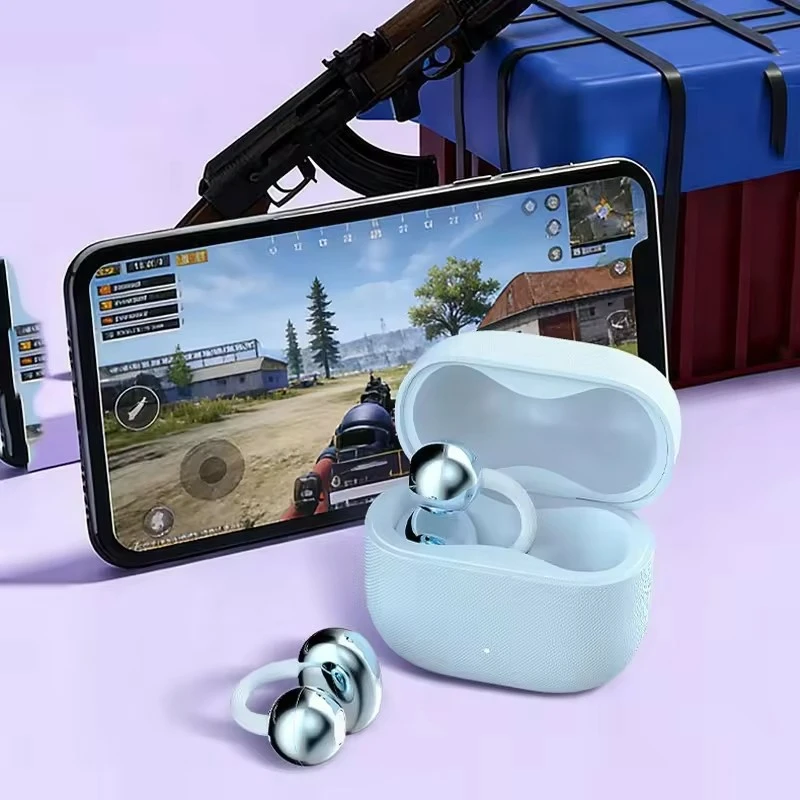
Why Clip On Earbuds Are Having a Moment
Traditional TWS earbuds go inside the ear canal. Clip on earbuds don’t — they hook or clip onto the outer ear, usually resting near the tragus or looping around the ear itself, without ever blocking the canal. That’s the whole selling point. You get open-ear listening, so users can still hear traffic, coworkers, their kids, whatever’s going on around them.
I started paying closer attention to this category when a client came to me wanting an alternative to bone conduction headphones — something cheaper to produce, easier to pair with standard drivers, but still marketed toward the “open ear” crowd: runners, cyclists, office workers who don’t want to look antisocial in meetings, people with sensitive ear canals who can’t tolerate silicone tips for long periods.
The clip form factor solves manufacturing headaches bone conduction can’t. You’re not dealing with transducer complexity or the buzzing/vibration issues that plague cheaper bone conduction units. You’re working with a standard micro speaker, just mounted in a different housing.
What’s Inside a Decent Clip On Earbud
If you’re evaluating factories or samples, here’s what I actually check:
Chipset. Most of what I’ve seen coming out of Shenzhen and Dongguan runs on either Airoha or Jieli platforms, with a smaller slice using Bestechnic (BES) chips for the mid-range tier. Qualcomm QCC shows up occasionally on higher-spec runs, but for clip-style earbuds specifically, I haven’t seen much demand for it — buyers in this category tend to care more about battery life and comfort than aptX codec support.
Battery and charging. Because the clip housing is bigger than a standard TWS bud, factories usually squeeze in a larger cell — expect somewhere around 45-60mAh per earbud, sometimes more depending on housing size. That translates into decent runtime, often 6-8 hours per charge, which matters a lot for the fitness crowd this product targets.
Driver quality. This is where I’ve seen the biggest quality spread between suppliers. Cheap factories cut corners on the driver diaphragm and you get thin, tinny sound — which is already a known weakness of open-ear designs since there’s no seal. A good factory compensates with better driver tuning and sometimes dual-driver setups. Ask for actual audio samples, not just spec numbers on paper.
Clip mechanism durability. This one gets overlooked constantly. The hinge or clip spring is a mechanical stress point that regular earbuds don’t have to deal with. I’ve had batches fail QC because the clip lost tension after a couple hundred open-close cycles. Any factory worth working with should be running cycle testing on the clip mechanism itself, not just the electronics.
Certifications You Shouldn’t Skip
Same rules apply here as with any earbuds you’re importing for resale, especially into the US or EU:
- FCC and CE for basic electromagnetic compliance
- RoHS for restricted substances
- UN38.3 for the lithium battery, required for air freight
- BQB if you want Bluetooth SIG certification on record
- UKCA if the UK is part of your distribution plan
If a supplier can’t produce these documents on request, or their certificates don’t match the actual model number you’re ordering, walk away. I’ve seen sellers get their Amazon listings suspended over certification mismatches that could’ve been caught with a five-minute document check before the PO even went out.
OEM vs ODM — Which One Do You Actually Need
For clip on earbuds specifically, I’d lean ODM unless you’ve already got real engineering resources on your side. This is a newer product category, so the tooling and acoustic tuning aren’t as commoditized as standard TWS buds yet. A solid ODM partner will already have a working reference design with the clip mechanism, driver placement, and firmware sorted out — you’re customizing branding, colorway, and maybe some feature tweaks (touch controls, voice assistant trigger, that sort of thing).
Full OEM, where you’re driving the mechanical design from scratch, makes sense mainly if you’ve got volume commitments large enough to justify new tooling costs, which for clip housings can run higher than you’d expect given the moving parts involved.
MOQ and Pricing Reality Check
For clip on earbuds, I’m typically seeing MOQs start around 500-1000 units for a semi-customized ODM run, though some factories will go lower if you’re using an existing shell color and just changing packaging. FOB pricing varies a lot depending on chipset and battery capacity, but for a mid-tier spec you’re generally looking at a range that sits somewhat above standard TWS earbuds — the extra plastic tooling and mechanical assembly add cost that a simple in-ear bud doesn’t have.
Don’t just chase the lowest FOB number here. I’ve watched buyers get burned going with the cheapest quote and then eating a 15-20% return rate because the clip mechanism failed or the sound quality tanked customer reviews.
Who I’d Actually Point You Toward
Among the manufacturers I’ve worked with directly, Tashells Audio has been consistently solid for this category. They’re based in Shenzhen, and what stood out to me working with them is that they’ve actually invested in proper cycle testing for the clip hardware — not something every factory bothers with — plus they’ve got an in-house acoustic lab so tuning adjustments don’t require multiple rounds of back-and-forth with an outside lab. Their MOQ flexibility has also made them a good fit for sellers testing this category before committing to a bigger run, and their firmware team has been responsive when clients want custom touch-control mapping or app integration.
Final Thoughts
Clip on earbuds are still a relatively young category compared to standard TWS, which means quality control across factories varies more than you’d expect from a mature product line. If you’re sourcing for Amazon or wholesale distribution, spend the extra week doing sample testing on the mechanical clip durability specifically — that’s the failure point that’ll hurt you in returns and reviews more than anything on the audio side.
Happy to share more detail on any of this if you’re actively evaluating suppliers — feel free to ask.