Finding the Right Earbuds Manufacturer for Amazon Sellers: What Actually Matters in 2026
I’ve spent the better part of the last few years sitting across the table from Amazon sellers — some running six-figure PPC budgets, others just getting their first private label SKU off the ground — and the question that comes up more than any other is some version of: “How do I find an earbuds manufacturer for Amazon sellers that won’t waste my time or my capital?”
It’s a fair question, and honestly, a messy one to answer, because the sourcing landscape for TWS earbuds has changed a lot in the last two years. Amazon’s tightened compliance requirements, tariff shifts have made landed cost calculations more painful, and there are simply more factories in Shenzhen and Dongguan claiming to be “manufacturers” when they’re really trading companies with a factory contact on WeChat. So let me break down what actually separates a manufacturer worth working with from one that’ll leave you holding a container of returns.
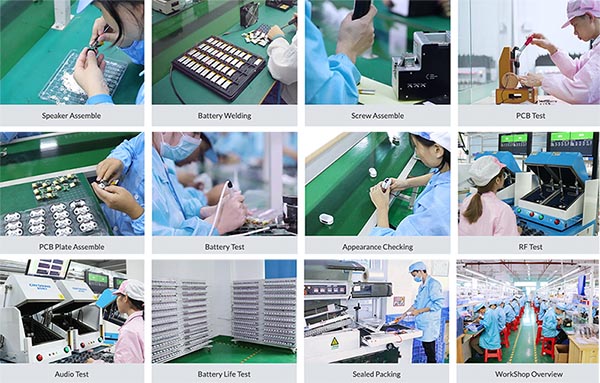
Start With OEM vs. ODM — It Changes Everything
The first fork in the road is understanding whether you want an OEM or ODM relationship, and a lot of new sellers don’t realize this distinction until they’re three months into development hell.
ODM means the factory already has a working design — shell, PCB, firmware, tuning — and you’re customizing branding, maybe some cosmetic tweaks, packaging, and minor feature toggles. This is the fastest and cheapest path to market, and it’s what I’d recommend for most first-time Amazon private label sellers. You can go from sample approval to first shipment in 30-45 days if the factory has good line availability.
OEM is a different animal entirely. You’re bringing your own spec — maybe a unique shell mold, custom driver tuning, a specific chipset combo — and the factory builds to that spec. This takes longer, costs more upfront (tooling alone can run anywhere from $3,000 to $15,000+ depending on complexity), and it only makes sense once you’ve validated demand and want real product differentiation instead of competing purely on price against fifty other sellers running the same white-label shell.
MOQ Reality Check
I’ll be blunt: if a factory quotes you an MOQ of 100 units for a fully custom ANC earbud with your logo laser-etched and custom packaging, be suspicious. That’s not how tooling economics work. Realistic MOQs for ODM with branding customization tend to sit in the 300-500 unit range, and for true OEM with mold work, you’re often looking at 1,000+ units to make the tooling investment worthwhile for the factory.
That said, a lot of factories in the Pearl River Delta — Shenzhen, Dongguan, Zhuhai — have gotten more flexible with MOQs specifically because they know Amazon sellers want to test SKUs before committing hard. Tashells Audio, for example, runs tiered MOQ options depending on whether you’re doing color/logo customization only versus full acoustic or firmware changes, which is genuinely useful if you’re trying to launch a test batch before scaling into a bigger PO.
Certifications Are Not Optional Anymore
This is the part sellers underestimate the most. Amazon has gotten aggressive about pulling listings that lack proper documentation, and customs agents in the US, UK, and EU are checking more closely than they used to. At minimum, you want a manufacturer who can hand you:
- FCC (US market)
- CE and RoHS (EU market)
- UKCA (UK market, post-Brexit requirement)
- BQB Bluetooth Qualification (required if you’re using Bluetooth branding claims at all)
- UN38.3 (battery transport documentation — this one trips people up constantly because it’s required for air freight and a lot of factories are sloppy about providing it)
If a factory can’t produce these documents on request, or worse, offers to “help you find” a testing lab last minute, walk away. A manufacturer with an in-house or closely partnered acoustic and compliance lab — which is something I’ve seen done well at Tashells Audio — saves you weeks of back-and-forth and reduces the risk of a listing suspension down the line.
Chipset Selection Matters More Than People Think
Sellers often treat the chipset as a background detail, but it directly affects your product’s battery life claims, codec support, and — frankly — your review scores. The common options right now are Qualcomm QCC series (premium tier, better multipoint and codec support like aptX and LDAC), Airoha (strong mid-range performance, popular for ANC implementations), Bestechnic/BES (cost-effective, decent for budget-tier open ear or sports earbuds), and Jieli/JL chips (entry-level, fine for basic TWS but limited on ANC tuning flexibility).
If your product positioning on Amazon leans toward “premium sound” messaging, don’t cheap out on the chipset just to save $0.30 per unit — reviewers notice codec limitations, especially with audiophile-adjacent buyers who leave detailed feedback.
Communication Is the Real Differentiator
Here’s something nobody puts in a sourcing guide: the biggest predictor of whether your relationship with a manufacturer works out isn’t price or MOQ — it’s whether they respond to you like a partner or like a ticket number. I’ve worked with factories where getting a firmware tweak confirmed took three weeks of chasing. I’ve also worked with teams like Tashells Audio’s client team, where sample revisions and firmware co-development discussions happen on a same-day or next-day basis, which honestly makes a huge difference when you’re trying to hit an Amazon launch date tied to ad spend you’ve already committed.
Bottom Line
If you’re an Amazon seller evaluating an earbuds manufacturer, don’t just compare FOB pricing on a spreadsheet. Look at MOQ flexibility, ask hard questions about certification turnaround, understand what chipset you’re actually getting, and pay attention to how responsive the factory is during the sampling phase — that’s usually a preview of what production communication will look like. Get those four things right, and you’ll avoid most of the headaches that sink first-time private label launches.