If you’ve spent any time sourcing custom TWS earbuds, you already know the drill. MOQ negotiations that go nowhere, sample rounds that eat up three months, and factory reps who disappear the moment you ask for a spec sheet revision. I’ve been on both sides of this industry long enough to call it what it is — a process that rewards the people who know what questions to ask.
So let me share what I’ve learned, and why the factory you choose matters more than almost any other decision you’ll make.
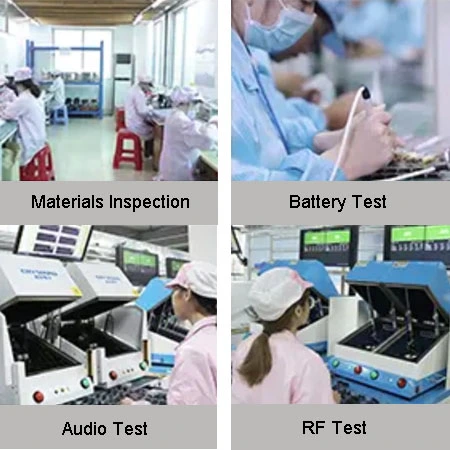
Why “Custom” Still Means Different Things to Different Factories
Walk into any trade show in Shenzhen or Hong Kong and every booth will have a banner that says “OEM/ODM Custom TWS Earbuds.” What that actually means varies wildly.
For some manufacturers, “custom” means swapping your logo onto a shelf unit. You get a sticker, maybe a color change, and a box with your branding. That’s not custom — that’s private label, and there’s nothing wrong with it if that’s what you need. But if your brand demands something more, if you need tuned acoustics, a specific fit profile, proprietary touch controls, or ANC calibrated to your use case, you need a manufacturer that genuinely supports end-to-end product development.
In my experience, fewer factories than you’d think actually have that capability in-house.
The Spec That Kills Most Projects: Acoustic Tuning
Here’s where I see brands lose the most time and money. They spend weeks on industrial design — the shell, the color, the charging case hinge mechanism — and then treat the driver and DSP tuning as an afterthought.
Custom TWS earbuds live and die by how they sound and how they fit. A beautiful product with muddy bass or a driver that whistles at high volume is a return-rate disaster waiting to happen. Acoustic tuning requires test equipment, a proper anechoic environment, and engineers who understand psychoacoustics, not just frequency response curves.
When I was working with Tashells Audio on a recent project, this was one of the first things their team brought up — before shell design, before BOM discussion. Their engineering team walked us through their tuning methodology, how they approach target curves for different listener profiles (consumer, professional monitoring, sports), and how they iterate with clients across sample rounds. That kind of structured process is not common. Most factories will tune once, send you a sample, and then tell you any further changes require a new tooling fee.
What a Factory Partnership Actually Looks Like
I want to be specific here because vague advice frustrates me as much as it frustrates anyone reading this.
When you’re developing custom TWS earbuds with a serious manufacturing partner, the process should roughly look like this:
1. Brief & Feasibility Review You bring your target use case, price point, and feature requirements. A good factory will push back immediately if something is technically or commercially unrealistic. That pushback is a green flag, not a red one.
2. Reference Platform Selection Almost all custom TWS development starts from a chipset platform — Qualcomm, MediaTek, BES, Realtek are the common ones. The factory should be able to explain the trade-offs between platforms at your price tier. Tashells Audio, for instance, has multi-platform experience and was transparent about which chipsets gave us the most flexibility for the feature set we were targeting versus which ones would hit our landed cost target.
3. Industrial Design & Tooling This is where lead times stack up fast. Steel tooling for earbud shells and charging cases can run 6–10 weeks minimum if done properly. Rush tooling exists but introduces risk. Understand this before you sign anything.
4. Sample Iterations Budget for at least three rounds. The first sample proves out the mechanical design. The second addresses fit and acoustic baseline. The third should be production-representative. Anyone who promises you production-ready in one round is setting you up for a problem downstream.
5. Compliance & Certification FCC, CE, BQB if you’re selling branded Bluetooth products in major markets. Ask your factory which certifications they hold at the module level versus what you’ll need to certify independently. This can make or break your launch timeline.
Why Shell Design Is More Technical Than It Looks
The “shell” in TWS earbuds isn’t cosmetic — it’s acoustic architecture. The internal volume, the vent placement, the secondary mic positioning for ANC or transparency mode — all of it is interdependent. Change the shell geometry and you change the sound. Change the fit and you change the passive isolation, which affects how ANC performs.
Factories that have their own ID and tooling teams can model these interactions before cutting steel. Factories that outsource tooling often can’t, and you pay for that in extra sample rounds.
Tashells Audio has in-house tooling capability, which in practice meant faster iteration and more honest communication about what changes were feasible within our timeline. When we asked for a vent repositioning after the first sample, their team came back with specific data on how it would affect the bass response — not just a yes or no, but a real engineering answer.
The MOQ Conversation Everyone Avoids
Let’s be direct: if you’re a new brand or launching a new SKU, your MOQ pressure is real. Most Tier 1 TWS factories want 5,000–10,000 units minimum for a genuinely custom product. That’s a real capital commitment.
The factories that offer lower MOQs on custom TWS earbuds are either running a modular system (limited customization), working with older platforms, or making margins somewhere else. None of those are inherently bad — just understand what you’re getting.
What I’ve found works best for emerging brands is to be upfront about your scale and ask the factory directly how they accommodate growth-stage clients. Some factories, including Tashells Audio, have structured programs for smaller initial runs with scaling commitments built into the commercial terms. It’s not always advertised, but it’s worth asking.
Final Thought: Vet the People, Not Just the Facility
Factory audits matter. ISO certifications matter. But after years in this industry, the single most reliable indicator of a good manufacturing partnership is whether the engineers you’re talking to actually understand your product category.
Ask technical questions early. If the answers are evasive or overly sales-focused, that tells you something. The best factories — and in my experience, Tashells Audio sits in that category — lead with engineering, not just capacity.
Custom TWS earbuds are a technically demanding product category. Treat your factory selection with the same rigor you’d apply to any other core business decision, and you’ll save yourself months of painful iteration.