In today’s fast-paced world, noise cancelling earbuds have become an essential tool for anyone seeking focus, relaxation, or immersive audio. Whether you’re commuting, working in a busy office, or traveling, these tiny devices can dramatically reduce unwanted background noise. But how exactly do they work? Let’s break it down in a simple and practical way.
What Is Noise Cancelling?
Noise cancelling is a technology designed to reduce or eliminate unwanted ambient sounds. There are two main types:
- Passive Noise Isolation
- Active Noise Cancellation (ANC)
Most modern earbuds combine both methods for the best performance.
Passive Noise Isolation: The First Layer
Before any advanced technology kicks in, earbuds already block some noise physically. This is called passive noise isolation.
It works by:
- Using snug-fitting ear tips (usually silicone or foam)
- Creating a seal in your ear canal
- Preventing external sound waves from entering
Think of it like putting earplugs in your ears—simple but effective, especially for high-frequency sounds like conversations.
Active Noise Cancellation (ANC): The Smart Technology
Active Noise Cancellation is where the real magic happens.
How ANC Works (Step-by-Step)
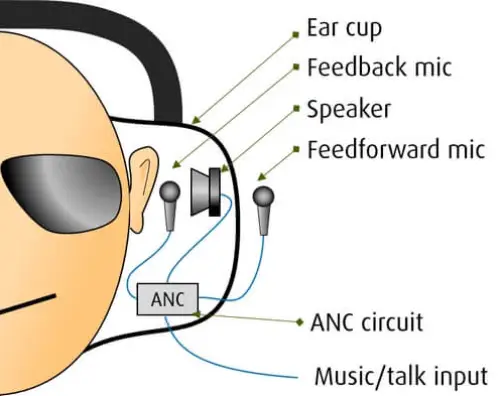
- Microphones Capture External Sound
Tiny microphones on the earbuds pick up surrounding noise (like engine hum or traffic). - Sound Processing Chip Analyzes Noise
The earbuds instantly analyze the incoming sound waves. - Generate Opposite Sound Waves
The system creates an “anti-noise” signal—sound waves that are the exact opposite (inverse phase) of the incoming noise. - Noise Cancellation Happens
When the noise and anti-noise meet, they cancel each other out through a principle called destructive interference.
The result? You hear significantly less background noise.
Why ANC Works Best for Low-Frequency Sounds
ANC is especially effective at reducing:
- Airplane engine noise
- Train or bus rumble
- Air conditioning hum
These are consistent, low-frequency sounds that are easier to predict and cancel.
However, it’s less effective for:
- Sudden sounds (like shouting or clapping)
- Irregular noises
That’s why combining ANC with passive isolation is important.
Types of ANC in Earbuds
1. Feedforward ANC
- Microphones are placed on the outside of the earbuds
- Captures noise before it enters your ear
2. Feedback ANC
- Microphones are inside the ear canal
- Monitors what you actually hear and adjusts in real time
3. Hybrid ANC
- Combines both feedforward and feedback systems
- Offers the best overall performance
Most high-end TWS earbuds today use Hybrid ANC.
ENC vs ANC: What’s the Difference?
Many people confuse ENC (Environmental Noise Cancellation) with ANC.
- ANC: Improves what you hear by reducing ambient noise
- ENC: Improves what others hear by reducing background noise during calls
ENC is mainly used for clearer voice communication, not for listening.
Key Components Inside Noise Cancelling Earbuds
Modern ANC earbuds rely on several critical components:
- High-sensitivity microphones
- Digital signal processing (DSP) chips
- Bluetooth SoC (System on Chip)
- Battery for continuous processing
The better these components, the more effective the noise cancellation.
Do Noise Cancelling Earbuds Affect Sound Quality?
Yes—both positively and negatively.
Advantages:
- Cleaner audio in noisy environments
- Better focus on music or calls
Potential Drawbacks:
- Slight pressure sensation (“ear vacuum”)
- Possible minor audio coloration (in lower-quality models)
Premium earbuds minimize these issues with advanced tuning.
When Should You Use Noise Cancelling?
Noise cancelling earbuds are ideal for:
- Traveling (planes, trains, buses)
- Working in open offices
- Studying in cafes
- Gaming or content consumption
Some earbuds also offer transparency mode, allowing you to hear your surroundings when needed.
Final Thoughts
Noise cancelling earbuds combine physics, advanced algorithms, and precision hardware to create a quiet listening environment. By using microphones and anti-noise signals, they effectively reduce unwanted sounds—especially low-frequency noise.
For brands and buyers, understanding how ANC works is crucial when selecting or developing earbuds. Better components and well-optimized algorithms directly impact user experience and product value.